What is WFE thin film evaporator
WFE thin film evaporator is an efficient evaporation device widely used in industries such as chemical, pharmaceutical, and food. WFE "is usually a specific model designation given by equipment manufacturers to a product, but from a general perspective, it belongs to the category of thin film evaporators and has typical characteristics and working principles of this type of evaporator. Here is a d
WFE thin film evaporator is an efficient evaporation device widely used in industries such as chemical, pharmaceutical, and food. WFE "is usually a specific model designation given by equipment manufacturers to a product, but from a general perspective, it belongs to the category of thin film evaporators and has typical characteristics and working principles of this type of evaporator. Here is a detailed introduction for you:
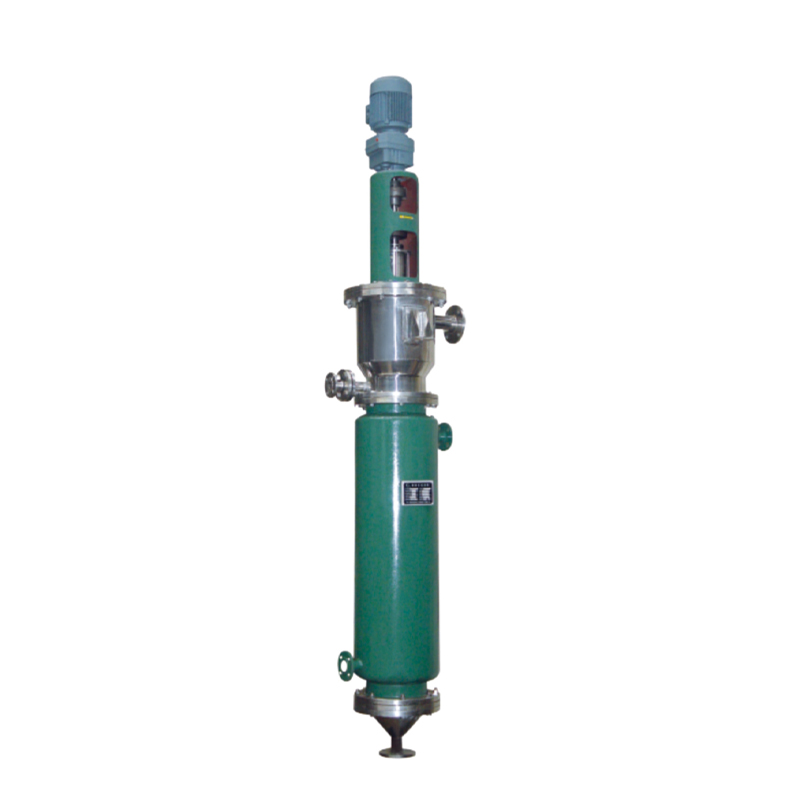
Structural composition
1. Heating system: generally composed of a jacket or built-in heating element. The jacket surrounds the exterior of the evaporator cylinder and can be filled with heat media such as steam and thermal oil to provide the required heat for material evaporation. For example, in chemical production, high-pressure steam is often introduced through a jacket, which releases latent heat and uniformly heats the inner wall of the cylinder, thereby heating the material. The built-in heating element is directly installed inside the evaporator, such as an electric heating tube, which can more accurately control the heating temperature.
2. Cylinder: It is the main place for material evaporation, where the material forms a thin film on the inner wall of the cylinder and evaporates when heated. The interior of the cylinder is smooth to reduce material flow resistance, facilitate uniform distribution of the film, and facilitate rapid heat transfer. Its material is mostly made of corrosion-resistant materials such as stainless steel to meet the requirements of different material characteristics. For example, in the pharmaceutical industry, stainless steel cylinder can avoid material contamination.
3. Fabric system: Its function is to evenly distribute materials on the inner wall of the cylinder, forming a thin film. Common fabric methods include centrifugal, gravity, and spray. The centrifugal fabric feeder throws the material towards the cylinder wall through high-speed rotation; Gravity type relies on the material's own gravity to flow uniformly down a specific device; Spray type is the use of nozzles to spray materials onto the cylinder wall. For example, when dealing with materials that are prone to coking, centrifugal fabric systems can quickly distribute the materials evenly, avoiding local overheating and coking.
4. Scraper system: composed of a scraper and a rotating shaft, the scraper is tightly attached to the inner wall of the cylinder. When the material forms a thin film on the cylinder wall, the scraper continuously scrapes the film, causing the material to constantly renew, enhancing heat transfer efficiency, and preventing material scaling or overheating decomposition on the wall surface. The rotating shaft drives the scraper to rotate, and the speed can be adjusted according to the material characteristics and processing capacity.
5. Vacuum system: connected to the evaporator, used to maintain the internal vacuum environment, reduce the boiling point of materials, and achieve low-temperature evaporation. In a vacuum state, materials can rapidly vaporize at lower temperatures, making them particularly suitable for thermosensitive materials such as active ingredients in food and medicine, avoiding damage to their quality caused by high temperatures.
6. Gas liquid separation system: During the material evaporation process, the steam generated and the unevaporated liquid need to be separated. The gas-liquid separation device is usually located at the top of the evaporator, and separates steam and liquid through principles such as centrifugal force and flow separation. The separated steam enters the condenser and condenses into liquid before being collected; The unevaporated liquid may be partially refluxed to the evaporator for re evaporation and partially discharged according to process requirements.
working principle
The material enters the evaporator through the feeding port and is evenly distributed on the inner wall of the cylinder through the fabric system, forming a very thin liquid film. At the same time, the heating system provides heat, causing the temperature of the cylinder wall to rise and the liquid film material to rapidly evaporate upon heating. The scraper continuously scrapes the liquid film, causing the material to constantly renew on the cylinder wall and enhancing the heat and mass transfer process. The generated steam rapidly rises under vacuum and enters the gas-liquid separation system, separating from the unevaporated liquid. The steam is collected after being condensed by the condenser, and the concentrated material is discharged from the bottom of the evaporator.
characteristic
1. High heat transfer efficiency: The material forms a thin film on the cylinder wall, increasing the heat transfer area, and the scraper continuously updates the liquid film, reducing thermal resistance and accelerating heat transfer speed. For example, compared to traditional kettle evaporators, the heat transfer coefficient of WFE thin film evaporators can be increased several times, which can quickly evaporate solvents from materials.
2. Low evaporation temperature: With the help of a vacuum system, materials evaporate at temperatures lower than their boiling point at atmospheric pressure, effectively protecting the quality of thermosensitive materials and preventing them from denaturing, decomposing, or losing their activity due to high temperatures. When concentrating fruit juice in the food industry, the aroma components and nutrients in the juice can be retained.
3. Short residence time: The residence time of materials in the evaporator is generally only a few seconds to tens of seconds, which is particularly important for materials that are prone to oxidation and polymerization. It can reduce the residence time of materials at high temperatures and lower the possibility of side reactions.
4. High concentration ratio: It can achieve a higher concentration ratio and concentrate dilute solutions to higher concentrations. When preparing high-purity extracts in the pharmaceutical industry, low concentration extracts can be concentrated to the desired concentration.
5. High operational flexibility: The feeding amount, heating temperature, scraper speed, vacuum degree and other operating parameters can be flexibly adjusted according to the characteristics and production needs of different materials, to adapt to various production process requirements.


 WeChat number:WEIXINHAOMA


 Home
Home
 Product
 Wechat
 Telephone